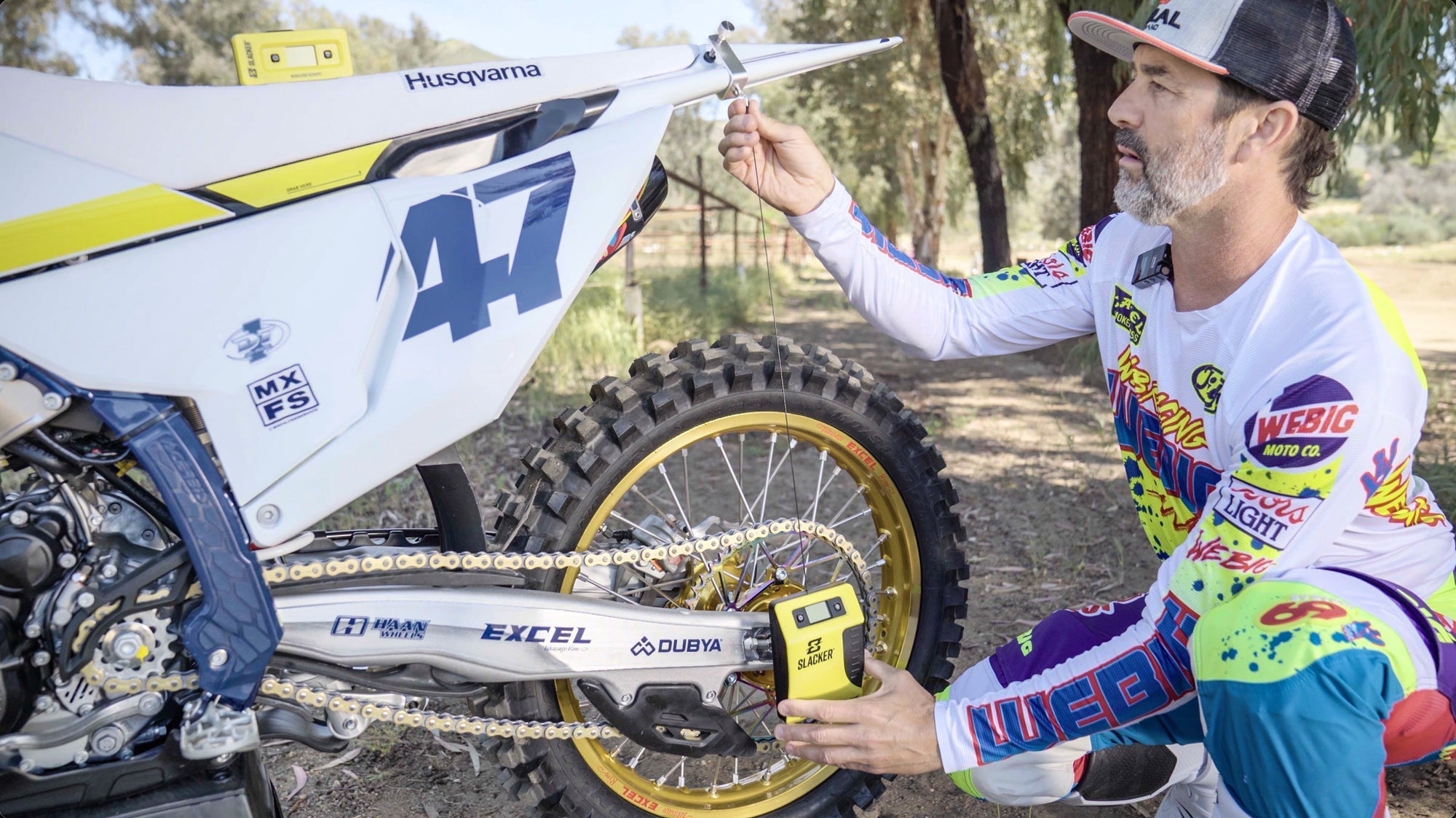

Sag is one of the most fundamental concepts in motorcycle and mountain bike suspension — and getting it right makes a bigger difference than almost any other adjustment you can make.
In simple terms, sag is the amount your suspension compresses under weight. When your bike is sitting still with no rider, the springs hold everything up. The moment weight is applied — whether that's the bike's own mass or you sitting on it — the suspension compresses. That compression is sag. Think of it as the baseline position your suspension settles into before you ever hit a bump.
Every suspension system has a finite amount of travel available. If your suspension is already compressed too far before you start riding, you've used up part of that travel before you've hit a single obstacle. Too little compression and the suspension sits too high, affecting geometry and making the ride harsh. The sweet spot your baseline sag is where the spring rate and your weight find their natural balance point.
Sag is measured in millimeters and is often expressed as a percentage of total suspension travel. For example, if your rear shock has 100mm of travel and you're targeting 30% sag, you're aiming for about 30mm of compression under rider weight.
Why it matters across bike types:
Dirt bikes — Sag sets your chassis geometry, controls weight distribution front-to-rear, and determines how much travel you have available to absorb hits. Most MX and enduro bikes target 95–110mm of rear rider sag.
Street bikes — Sag affects rake, trail, and wheelbase — the geometry that governs how your bike steers and how stable it feels under braking. Typically 25–35mm of rear rider sag.
Adventure bikes — ADV bikes carry variable loads, making sag a setting that needs to be revisited whenever your load changes. Target sag varies widely depending on the bike's off-road vs. road bias.
Mountain bikes — Sag is usually expressed as a percentage of total travel (25–35% is common) and directly affects the bike's head angle, bottom bracket height, and traction.
Getting sag right is the starting point for all other suspension tuning. Clickers, compression damping, and rebound adjustments only work properly once sag is correct. Think of it as your suspension's home base — every other setting works around it.
Gwet you Slacker today at getslacker.com or Amazon.com!